
PET Transformation into a nanomaterial
News- UC Riverside (UCR) engineers have developed a way to recycle PET (polyethylene terephthalate) plastic waste, such as soda or water bottles, into a nanomaterial useful for energy storage. An open-access paper on the work is published in the journal Energy Storage
The researchers first dissolved pieces of PET plastic bottles in a solvent. Then, using an electrospinning process, they fabricated microscopic fibers from the polymer and carbonized the plastic threads in a furnace. After mixing with a binder and a conductive agent, the material was then dried and assembled into an electric double-layer supercapacitor within a coin-cell type format. When tested in the supercapacitor, the material contained the characteristics of both a double-layer capacitor formed by the arrangement of separated ionic and electronic charges, as well as redox reaction pseudo-capacitance that occurs when the ions are electrochemically absorbed onto surfaces of materials
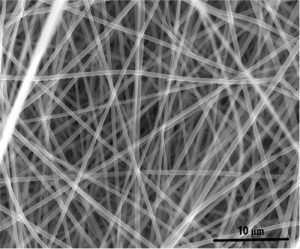
Scanning electron microscope image of a material for energy storage made from upcycled plastic bottles
Although they don’t store as much energy as lithium-ion batteries, these supercapacitors can charge much faster—a good option for many applications. By doping the electrospun fibers prior to carbonization with various chemicals and minerals such as boron, nitrogen, and phosphorous, the team plans to tune the final material to have improved electrical properties. The authors (Arash Mirjalili, Bo Dong, Pedro Pena, Cengiz S. Ozkan, Mihrimah Ozkan) believe the process is scalable and marketable, and that it represents major progress toward keeping waste PET out of landfills and the oceans
8/14/2020
This post is also available in: Persian




Leave a Reply
Want to join the discussion?Feel free to contribute!