
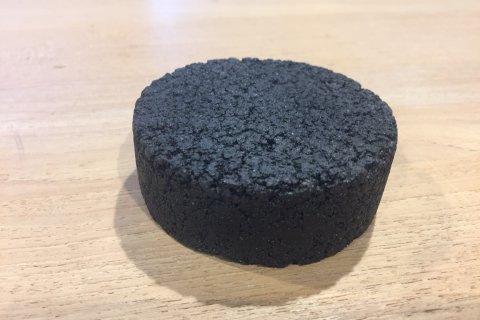
Lignin: An Ingredient for Greener Roads
News- In recent years, environmental considerations related to the use of petroleum-based products have led many around the world to evaluate greener options for reducing the carbon footprint of asphalted roads. Lignin, a natural byproduct from pulp and paper, is known as a “natural wood glue,” is being recognized as a potential replacement for bitumen in asphalt. Asphalt for roads is manufactured by binding together aggregate with bitumen, a petroleum product. Lignin binds together the cellulose fibers in plants, and so, it is believed it can serve the same purpose in the production of asphalt
FPInnovations’ Environment and Sustainability group analysed the potential environmental benefits of using lignin in asphalt. In a preliminary study performed for the province of Alberta, assuming it is feasible to substitute 5% to 10% of the bitumen in a typical asphalt mixture with lignin, results showed that emissions of up to 16,000 to 31,000 tonnes of CO2 equivalent per year could be avoided. On a national scale, this translates into a reduction of GHG emissions in the order of 117,000 to 260,000 tonnes of CO2 eq. per year. This is equivalent to removing up to 56,171 cars from the road each year
To read the full blog from FPInnovations, click here
20.04.2021
Ref: web.fpinnovations.ca
This post is also available in: Persian


Leave a Reply
Want to join the discussion?Feel free to contribute!